



Limestone Powder
Limestone Powder Manufacturer & Bulk Supplier for Construction, Agriculture and Industrial Applications
Industrial-grade fine ground limestone powder (GCC) featuring high chemical purity, controlled particle size distribution (PSD), and high brightness for coatings, plastics, paper, and building materials.
Limestone powder (CaCO3) is processed from selected high-purity natural calcite and limestone reserves through multi-stage crushing, Raymond/vertical roller milling, and high-efficiency air classification. It serves as a cost-effective, chemically stable mineral filler and functional additive. Processing parameters—including milling intensity and classifier rotor speed—are tightly regulated to achieve targeted particle fineness (d50 / d97), narrow particle size distribution, and consistent brightness without over-grinding or excessive fines.

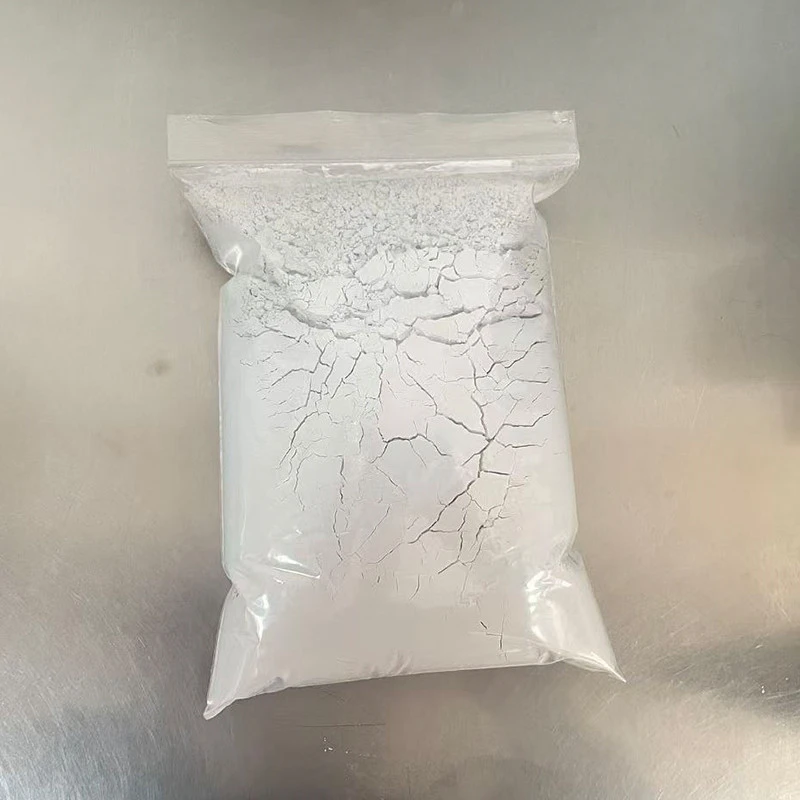


dshow machinery co.,ltd
Ultra-Fine Coated & Uncoated Grade (d50: 2 - 5 um):
Designed for engineering plastics, PVC profiles, sealants, and high-end water-based paints requiring high surface area and smooth dispersion.
Standard Industrial Filler Grade (325 mesh to 600 mesh):
Optimized for architectural coatings, adhesives, rubber compounds, and friction materials where balanced rheology and cost-efficiency are prioritized.
Coarse Aggregate & Construction Grade (200 mesh and below):
Tailored for dry-mix mortars, tile adhesives, asphalt concrete modification, and glass manufacturing where controlled coarse residue and low moisture are mandatory.

Technical Data Table
|
Parameter |
Ultra-Fine Coated Grade |
Standard Industrial Grade |
Coarse Construction Grade |
Testing Method |
|
Calcium Carbonate (CaCO3) |
>= 98.5% |
>= 96.0% |
>= 93.0% |
EDTA Titration / XRF |
|
Whiteness / Brightness |
>= 94.0% |
>= 90.0% |
>= 85.0% |
ISO 787-7 / Hunter Brightness |
|
Mean Particle Size (d50) |
2.5 - 5.0 um |
10.0 - 15.0 um |
45.0 - 75.0 um |
Laser Particle Size Analyzer |
|
Top Cut Particle Size (d97) |
<= 15 um |
<= 45 um |
<= 150 um |
Laser Particle Size Analyzer |
|
Magnesium Carbonate (MgCO3) |
<= 1.0% |
<= 2.0% |
<= 3.5% |
XRF Analysis |
|
Acid Insoluble Matter |
<= 0.5% |
<= 1.5% |
<= 3.0% |
Gravimetric Analysis |
|
Oil Absorption Value |
18 - 22 g/100g |
14 - 18 g/100g |
10 - 14 g/100g |
ISO 787-5 |
|
Moisture Content |
<= 0.2% |
<= 0.3% |
<= 0.5% |
Infrared Moisture Balance |
|
Surface Modification (Optional) |
1.0% - 1.5% Stearic Acid |
Untreated |
Untreated |
Extraction / Titration |
Industrial Applications
Coatings & Paints: Functions as an extender pigment in architectural and industrial paints. It improves scrub resistance, controls gloss levels, reduces titanium dioxide (TiO2) consumption, and enhances film integrity.
Plastics & Masterbatches: Used as a rigid filler in PVC pipes, cable compounds, polyolefin films, and color masterbatches. It increases impact resistance, dimensional stability, and thermal conductivity.
Rubber Compounding: Acts as a reinforcing and filling agent in rubber hoses, gaskets, conveyor belts, and molded goods, optimizing tensile strength and hardness.
Dry-Mix Mortars & Building Materials: Provides particle packing density in tile adhesives, joint fillers, wall putties, and self-leveling flooring compounds, ensuring crack resistance and workability.
Paper & Glass Manufacturing: Serves as a neutral/alkaline filler to improve paper opacity and brightness, and acts as a calcium source in container glass batch formulations.
Quality Control & Testing
Quarry Ore Selection:
Raw limestone and calcite blocks are sorted and tested by XRF to maintain baseline CaCO3 purity and prevent iron-bearing mineral contamination.
Dynamic Air Classification:
High-precision vertical air classifiers operate in closed-circuit with grinding mills, maintaining strict control over the top-cut (d97) to eliminate oversized particles.
Laser Diffraction & Brightness Testing:
Particle size distribution curves and Whiteness meters are utilized hourly to verify compliance with customer specifications.
Coating Rate Verification:
For surface-treated (activated) grades, solvent extraction and fatty acid bonding tests ensure complete stearic acid encapsulation on calcium carbonate surfaces.

Available Granulometry & Processing
Micro-Fine Grades (d50: 2 - 5 um): Uncoated or surface-modified with stearic acid for enhanced polymer compatibility.
Fine & Medium Grades (325 mesh to 600 mesh): Standard powders for general coatings and rubber applications.
Custom Blends: Tailored particle size distribution curves designed for specific manufacturing rheology requirements.
Secure Packaging Solutions
Limestone powder is hydroscopic under extreme humidity and requires secure containment to prevent caking during transport:
25 kg Multi-Wall Paper Bags: Polyethylene-lined kraft paper bags palletized and stretch-wrapped with weather-resistant hoods.
1,000 kg / 1,200 kg FIBC Jumbo Bags: Heavy-duty woven polypropylene bulk bags equipped with inner PE liners and discharge spouts for closed-system pneumatic feeding.
Bulk Powder Tanker Trucks: Direct pneumatic loading into factory silos for high-volume manufacturing plants.
Bulk Supply & Export Logistics
Monthly Capacity:
50,000 Metric Tons of ground calcium carbonate products.
Storage & Handling:
Enclosed vertical storage silos with automated moisture monitoring and fluidization systems.
Export Containers:
Loaded in 20-foot dry containers (24 to 26 MT per FCL depending on port weight regulations).
Documentation:
Complete batch shipment documentation including Certificate of Analysis (CoA), Safety Data Sheet (SDS), Commercial Invoice, Packing List, and Certificate of Origin (CoO).
Our Certificate


fAQ
Q: What is the difference between Ground Calcium Carbonate (GCC) and Precipitated Calcium Carbonate (PCC)?
A: Ground calcium carbonate (GCC) is produced through the mechanical crushing and fine grinding of natural limestone or calcite ore. Precipitated calcium carbonate (PCC) is synthesized through chemical precipitation (carbonation of milk of lime). GCC offers cost advantages, lower oil absorption, and high loading capacity, making it the preferred choice for bulk industrial filling.
Q: How does particle size (d50 and d97) affect paint and plastic performance?
A: The median particle size (d50) influences viscosity, gloss, and opacity, while the top-cut (d97) dictates the maximum particle size present. A tightly controlled d97 prevents surface defects, micro-scratches in thin plastic films, and nozzle clogging in automated spray applications.
Q: Do you offer surface-modified (activated) limestone powder?
A: Yes. For plastic compounding, PVC masterbatches, and rubber applications, we offer limestone powder surface-treated with high-grade stearic acid (typically 1.0% to 1.5%). This treatment improves hydrophobicity, dispersibility, and interfacial bonding with polymer matrices.
Q: How do you prevent moisture absorption and caking during ocean shipping?
A: All export packages—including 25 kg bags and 1,000 kg jumbo bags—are equipped with heat-sealed internal polyethylene liners. Pallets are wrapped with heavy-duty stretch film to isolate the mineral powder from maritime humidity, ensuring free-flowing properties upon arrival.
Q: What testing methods are used to verify chemical and physical parameters?
A: Chemical purities (CaCO3, MgCO3) are verified using EDTA titration and XRF spectroscopy. Particle size distribution is measured via laser diffraction analyzers (ISO 13320), and whiteness is quantified using ISO 787-7 brightness spectrophotometers.
Q: What is the standard Minimum Order Quantity (MOQ) for custom particle grades?
A: The standard MOQ for custom particle size distribution curves or specialized surface-coated grades is one 20-foot container (approx. 24 Metric Tons), allowing efficient sea freight pallet loading and batch testing.