



Slaked Lime Powder
Industrial-Grade Slaked Lime Powder (Ca(OH)2) for Flue Gas & Water Treatment
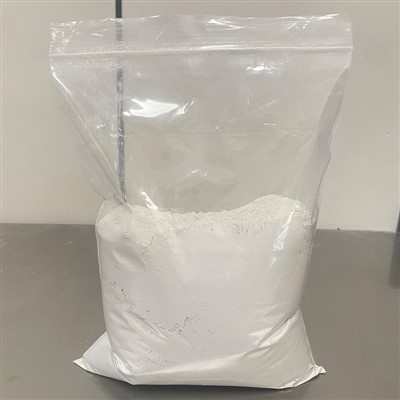
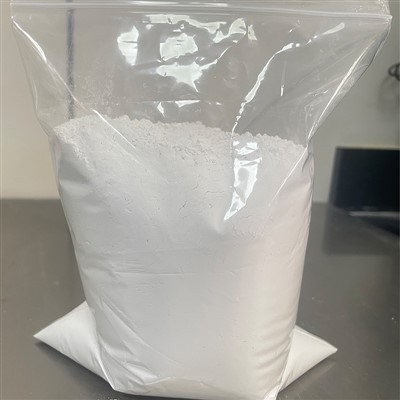
Slaked Lime Powder (Ca(OH)2, Calcium Hydroxide) processed from high-calcium quicklime reserves through controlled multi-stage hydration. Engineered for industrial flue gas desulfurization (FGD), acidic wastewater neutralization, and metallurgical processing, featuring high available lime content and tight particle size distribution.




Industrial Applications
Flue Gas Desulfurization (FGD) & Acid Scrubbing
High-surface-area calcium hydroxide injected into dry and semi-dry duct sorbent injection (DSI) systems. Reacts directly with acidic gases (SO2, SO3, HCl, HF) generated by power plants and waste-to-energy incinerators.
Wastewater & Effluent Neutralization
Applied in municipal and industrial effluent plants for precise pH correction and heavy metal precipitation (Cu2+, Ni2+, Pb2+, Zn2+).
Mining & Hydrometallurgical Extraction
Maintains stable alkaline conditions in gold, silver, and base metal leaching circuits, suppressing toxic HCN gas release during cyanidation.
Product Grades & Specifications
|
Grade Designation |
Active Ca(OH)₂ Content |
Particle Size |
Core Industrial Applications |
|
High-Reactivity FGD Grade |
≥ 92–95% |
98% below 45 μm (325 mesh) |
Dry/semi-dry flue gas desulfurization; SO₂ and HCl capture |
|
Water Treatment Grade |
≥ 90–92% |
95% below 75 μm (200 mesh) |
Municipal and industrial wastewater neutralization |
|
Metallurgical & Chemical Grade |
≥ 88–90% |
90% below 75 μm (200 mesh) |
Mineral leaching, steelmaking flux, and chemical synthesis |
|
Construction & Building Grade |
≥ 85% |
85% below 90 μm (170 mesh) |
Mortars, autoclaved aerated concrete (AAC) blocks, and soil stabilization |
Technical Data Table
|
Chemical & Physical Parameter |
High-Reactivity FGD Grade |
Water Treatment Grade |
Metallurgical Grade |
Test Method Reference |
|
Available Ca(OH)₂ Purity |
≥ 93.5% |
≥ 90.0% |
≥ 88.0% |
ASTM C25 / EN 459-2 |
|
Active CaO Equivalent |
≥ 70.8% |
≥ 68.2% |
≥ 66.7% |
ASTM C25 |
|
Free Moisture (H₂O) |
≤ 1.0% |
≤ 1.5% |
≤ 2.0% |
Oven Drying at 105°C |
|
Acid Insolubles (SiO₂) |
≤ 0.5% |
≤ 1.2% |
≤ 2.0% |
Gravimetric Analysis |
|
Magnesium Oxide (MgO) |
≤ 0.8% |
≤ 1.5% |
≤ 2.0% |
ICP-OES / XRF |
|
Iron Oxide (Fe₂O₃) |
≤ 0.05% |
≤ 0.15% |
≤ 0.30% |
Titration / XRF |
|
325 Mesh Residue (45 μm) |
≤ 2.0% |
≤ 5.0% |
≤ 8.0% |
Wet Sieve Analysis |
|
Bulk Density (Poured) |
0.45–0.55 g/cm³ |
0.48–0.58 g/cm³ |
0.50–0.60 g/cm³ |
ISO 787-11 |
|
BET Specific Surface Area |
18–22 m²/g |
14–18 m²/g |
10–14 m²/g |
N₂ Adsorption (BET) |
Raw high-calcium quicklime undergoes precise slaking in automated multi-stage hydrators integrated with real-time temperature and steam regulation. Air-classifier milling ensures consistent particle size distribution.
[Limestone Quarrying] -> [Vertical Kiln Calcination] -> [Automated Multi-Stage Hydration] -> [Air Classifier Milling] -> [XRF & Sieve QC Inspection] -> [Moisture-Proof Packaging]
Batch Verification Protocol (Every 50-Ton Production Lot)
X-Ray Fluorescence (XRF): Instant elemental tracking (Ca, Mg, Si, Fe).
Available Lime Titration: Strict adherence to ASTM C25 test methods to guarantee chemical reactivity.
Wet Sieve Analysis: Regular monitoring of oversize fractions at 45 um and 75 um.
Trace Metal ICP-MS Testing: Confirms compliance with environmental and water treatment safety thresholds.

Custom Particle Size & Packaging Configurations

Particle Size Tailoring
Advanced air classification systems allow customized gradation profiles (d50 and d90):
Micronized grades (d50 <= 5 um) for rapid chemical reactivity.
Standard industrial fine grades (45 um - 90 um) for pneumatic silo feeding.
Moisture-Resistant Packaging
To eliminate carbonation (CO2 absorption) and hydration degradation during ocean transport:
1,000 kg Bulk Bags (FIBC): Heavy-duty woven polypropylene with an integrated heat-sealed polyethylene inner liner (100–120 micron thickness).
25 kg Multi-Wall Kraft Paper Bags: 3-ply paper featuring an internal moisture barrier film, securely palletized and stretch-wrapped.
Pneumatic Bulk Tankers: Direct vessel loading for high-volume regional delivery.
Bulk Supply & Export Logistics
Monthly Production Capacity: 35,000 Metric Tons.
Minimum Order Quantity (MOQ): 20 Metric Tons (1 x 20ft FCL).
Port of Loading: Major coastal deep-water ports equipped with dedicated bulk mineral terminals.
Container Loading Capacity:
20ft FCL (Palletized): 20–22 Metric Tons.
20ft FCL (Unpalletized / Slipsheet): Up to 24 Metric Tons.
Export Documentation: Batch Certificate of Analysis (COA), Safety Data Sheet (SDS / MSDS under EU REACH & US OSHA GHS), Bill of Lading, Certificate of Origin.
Our Certificate


fAQ
Q: What is the difference between Available Lime and Total Calcium Hydroxide?
A: Available Lime measures the reactive Ca(OH)2 capable of immediate chemical reaction (via ASTM C25 sugar method). Total Ca(OH)2 includes inert fractions bound to carbonates (CaCO3) or silicates. Available Lime is the core metric for evaluating chemical cost-efficiency.
Q: How do you protect slaked lime powder from moisture absorption during ocean transit?
A: We utilize dual-layer protection. FIBC super sacks feature a heat-sealed 100+ micron polyethylene inner liner, and containers are packed with heavy-duty industrial desiccant packets to keep free moisture strictly below 1.0% throughout long voyages.
Q: Can you modify the BET surface area for dry sorbent injection systems?
A: Yes. By optimizing hydration temperature and water-to-lime ratios, we produce high-reactivity grades with BET surface areas ranging from 18 m2/g to 22 m2/g for enhanced acid gas capture.
Q: Does your slaked lime comply with drinking or municipal water treatment standards?
A: Our Water Treatment Grade complies with EN 12518 and AWWA B202 specifications, maintaining strict control limits on insoluble matter and trace heavy metals (Pb, As, Cd, Cr).
Q: What is the shelf life of packaged Slaked Lime Powder?
A: When stored in unopened, original packaging with intact inner liners inside a dry, covered warehouse, chemical purity and reactivity remain stable for up to 12 months.
Q: Do you provide sample lots for laboratory testing and pilot trials?
A: Yes. We supply 2 kg to 5 kg sealed sample pails accompanied by batch-specific Certificates of Analysis (COA) for client laboratory titration, particle size verification, and reactivity testing prior to commercial contract signing.